Your cart is empty
Your cart is currently empty. Let us assist you in finding the right product.

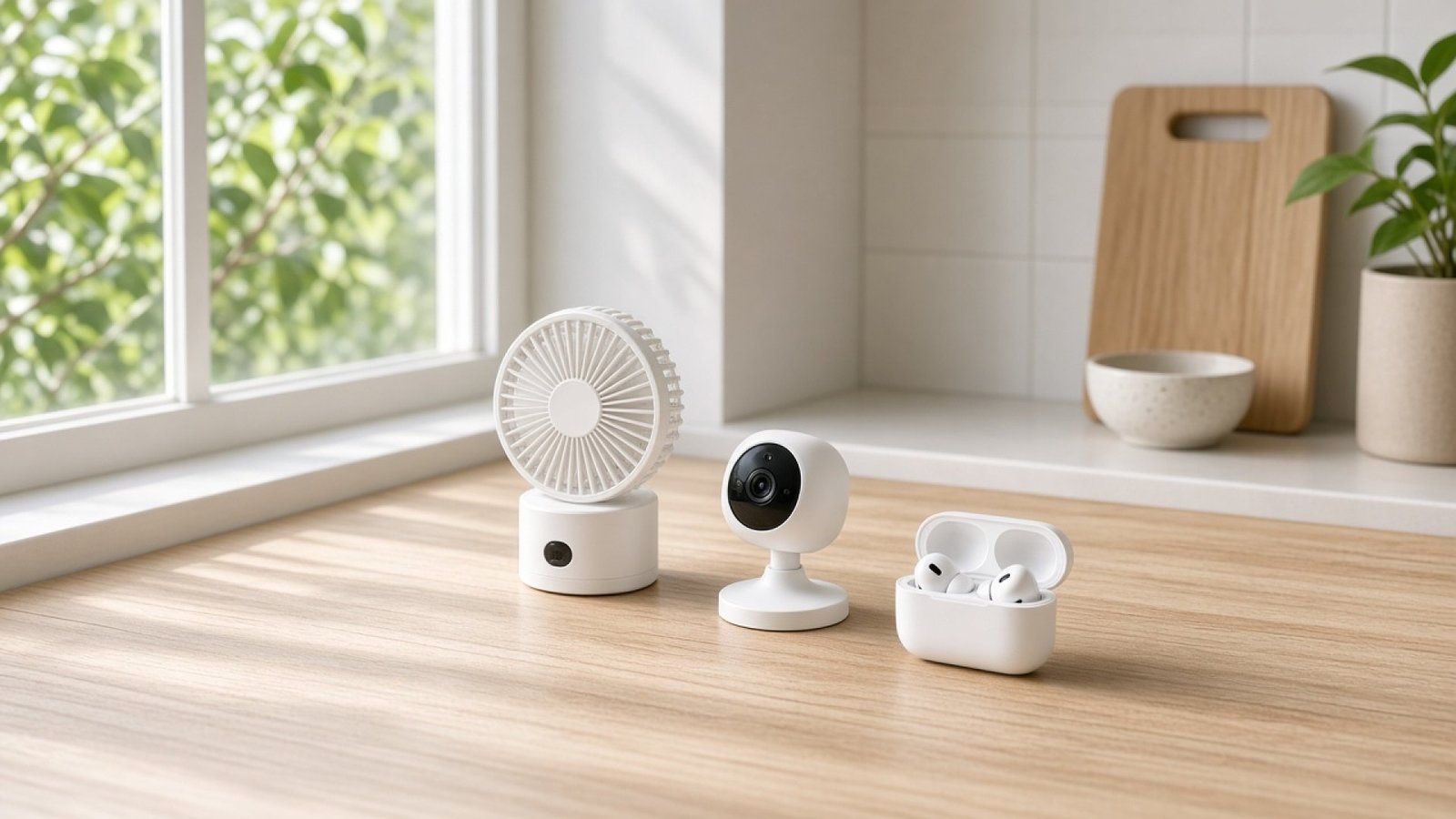
A house collects objects that promised to be useful and became clutter. The drawer of chargers. The fan that rattled. The camera that needed an app, a hub, and a weekend before it would watch a door. WireOWire’s gadget shelf is an argument against that drawer. If an item cannot explain its job in a sentence, it does not get a place. The sentence has to be something a person would actually say out loud: this cools the room, this shows me the porch, this plays on the walk, this lights the step.
That rule sounds strict until you look at what most “smart” catalogs ask you to forgive. A device that needs three accounts. A device whose battery is a secret. A device that works in the product photo and sulks in a real kitchen. We would rather have a shorter list. Cooling, security, audio, and the small goods filed under gadgets and home. Each one should be ordinary on purpose. Ordinary is a compliment. It means the object is allowed to disappear into the day and still be there when you need it.
Cooling is the easiest sentence. A room is too warm. A person is trying to sleep. A desk sits next to a window the afternoon owns. A fan that is quiet enough to forget is worth more than a fan that moves more air and sounds like a hobby. We look for portable cooling you can point, plug in, and leave alone. If it needs a speech, it is not ready for a bedroom.
Security is the sentence people feel in the evening. A camera at the door is not a lifestyle accessory. It is a way to see who is there without opening it, and a way to look back at the afternoon if a package goes missing. The useful ones are the ones you can actually check, on a phone, without a manual the size of a menu. Setup should be an evening, not a project. If a camera needs a hub, a subscription you did not expect, and a ladder you do not own, we would rather not be the shop that talked you into it.
Audio is more personal, and the test is the same. Earbuds for a walk. A small speaker for a kitchen. They should pair, play, and survive a bag. The 2-in-1 watch with earbuds is the odd one that keeps earning its keep: a watch when you want the time and a nudge, and earbuds when the walk is long enough to want a song. It is a single object doing two jobs, which is the whole point of a shelf with limited space. The smartphone watch sits in the same family. You glance, you move, you do not build a second phone out of your wrist unless you want to.
Then there are the prices that start at $9.99. A solar wall light and a handful of small goods live there on purpose. Not everything in a house has to be a decision you finance. Some things should be cheap enough to try, good enough to keep, and simple enough to replace if a season is unkind. Free shipping is what makes a nine-dollar light make sense. If the delivery cost as much as the light, the light would stay a picture on a website. Every order on WireOWire ships free, the small ones and the GT-600 alike, with no minimum hiding in the footer.
We still leave room for the ask. A watch, a bag, a bike that is built to a number we confirm by message. The button on those pages says Ask, and it opens WhatsApp with the product already named. You get a person, a price, and a chance to say no. The cart is for the things with a price in dollars. The conversation is for the rest. Nothing on that list is sold at zero. A zero would look like a bargain and behave like a mistake, so those products stay out of the cart until the price is real.
People sometimes ask what “everyday” means, as if the word were a category invented to sound gentle. It means the object is allowed to be ordinary. A light on a step. A fan in July. A camera that watches a door. A bike that does the school run. None of these need a launch, a countdown, or a colorway with a name. They need to work on a Tuesday, and they need to still work on the Tuesday after that. If we cannot picture the Tuesday, the product does not go on the shelf.
That is the standard we use when we add something to WireOWire. Can we explain it in a sentence a customer would repeat. Can we ship it free so the price on the page survives checkout. Can we answer a question about it on the same day, at +1 786 790 4296 or wireowire@gmail.com. If the answer is yes, it belongs with the others. If the answer is a brochure, it belongs in someone else’s drawer, and we are fine with that. A shop is a point of view. Ours is that a house is already full, and the next object has to earn the space.
The catalog is the proof, not the slogan. Filter it by solar, e-bikes, cooling, security, audio, gadgets, or home. Read the page. Order the ones with a price. For the ones without, ask, and wait for a number before you decide. We would rather have a shorter catalog of things that stay out of the junk drawer than a long one you have to apologize for later. If you are standing in a room right now trying to name the one job that is still undone, start there. The light, the ride, the fan, the camera, the song. One sentence. Then we can help you find the object that matches it.


More from the shop, on light, rides, and the gadgets that earn a place.

06 October
An e-bike does not replace every car trip. It replaces the ones that never deserved a car in the first place.

06 October
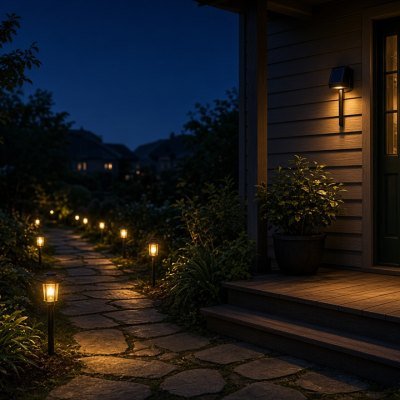
A solar light is a small promise: the day charges it, and the walk to the door stays a walk after dusk.
Your cart is currently empty. Let us assist you in finding the right product.
Cookie preferences